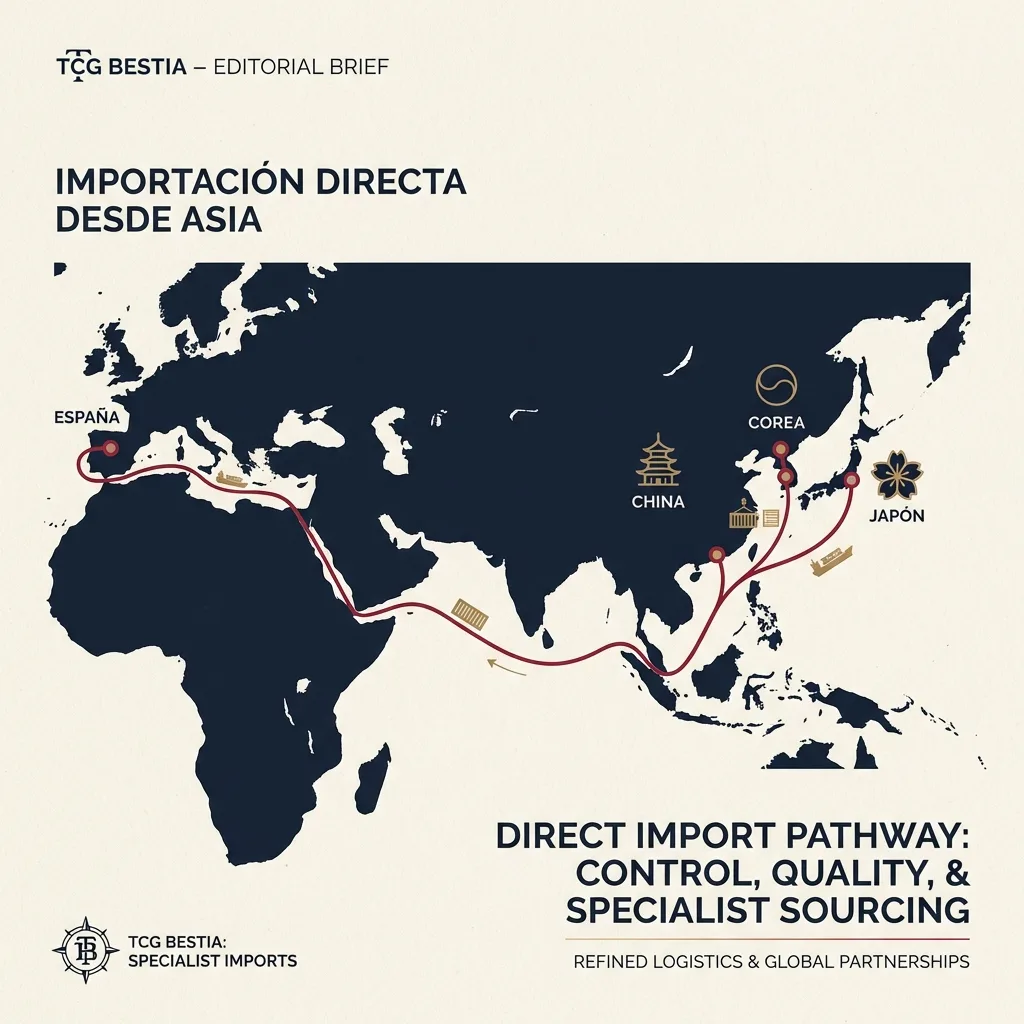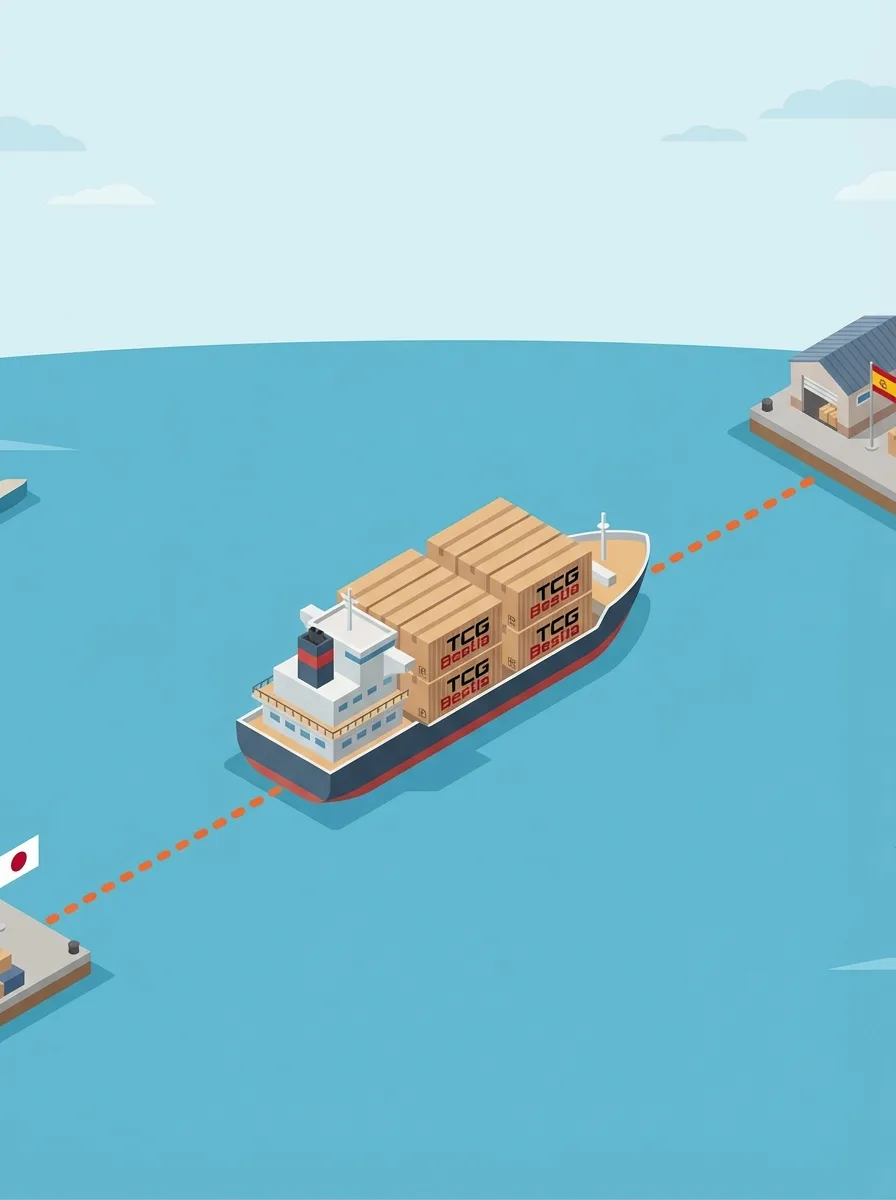
Korean Pokémon cards are official product printed under licence for South Korea, largely following the Japanese release calendar, and European stores can buy them wholesale from a direct importer such as TCG Bestia. This guide explains what the product is, why it is an interesting niche and how to avoid authenticity and logistics problems.
This guide explains what Korean product actually is, why it can be an interesting niche for European stores, and how to buy Korean Pokémon cards wholesale without getting burned on authenticity or logistics.
What Korean Pokémon product actually is
Korean-language Pokémon cards are printed under official licence for South Korea. This is not fan-made product: it largely follows the Japanese release calendar, with a delay and with its own product configurations.
Three things make it commercially distinct:
Exclusive arts and print runs
Korean sets can include promotional cards and packaging configurations specific to that market. For collectors who already own the English and Japanese versions of a chase card, the Korean printing can be the missing piece. Check each set's contents before you promote them.
A lower entry price than Japanese product
Because international demand has concentrated on Japan, Korean sealed product can offer a lower entry point than its Japanese equivalent. For a store, that can mean a lower cash outlay per display. Compare real quotes for each set.
Novelty that markets itself
A Korean booster box on a shelf full of English product can catch customers' attention on its own, and it can work well in opening events and on social media because many customers have not seen it before.
What it means for a European store
The pattern is familiar from Japanese product, which we broke down in our guide to Japanese Pokémon booster boxes at wholesale: the fewer intermediaries between the origin market and your shelf, the more room you can keep.
With Korean product the traditional European distribution chain barely touches it. There is no national distributor pushing Korean displays to every store in your city.
The risk side is real but manageable: the market is thinner than for Japanese product, so order sizing matters. Start with displays rather than cases, test your local demand, and scale on data.
How to position Korean product in your store
Korean Pokémon is not a replacement for your English or Japanese wall — it is a third tier with its own job. Some patterns that can help:
Position it as a collector product, not a budget product. Customers tend to buy Korean product because it is different, not because it is cheap, so decide your pricing from what your collectors value rather than only from your cost.
Lead with the exclusives. A shelf card or social post that says which promo or art in this Korean set never existed in English does more selling than any discount. The information itself is the product for collectors — most of them simply do not know what the Korean market has.
Use it in events. Korean displays as tournament prizes or box-opening content give your store something no competitor in your city can match. A Korean opening night per set release is an easy format to try.
Bundle across languages. A "one English, one Japanese, one Korean" booster bundle at a slight premium moves all three products and teaches your customers that the tiers exist. It is the cheapest customer-education tool available.
None of this requires expertise in the Korean market on your side — it requires a supplier who tells you what is in each set and what makes it scarce, which is part of what you should be paying a distributor for.
Authenticity: the one thing you cannot compromise on
Any product with a price premium attracts counterfeiters, and unfamiliar language product is where fakes hide most easily — most European store owners cannot read the packaging well enough to spot a bad copy. That makes your supplier's verification process the single most important thing to evaluate.
At TCG Bestia we import directly from verified Korean distributors and inspect product at origin, before it ships to Europe. Product is checked for tampering and reseals. Whatever supplier you choose, demand a described, concrete verification process — a supplier who answers with "everything we sell is original" and nothing more is asking you to carry their risk.
How buying works in practice
TCG Bestia is a Spanish B2B wholesale distributor. We import Pokémon product directly from Japan, Korea and China — plus One Piece Card Game and Dragon Ball Fusion World — and hold stock in Europe. For a store anywhere in the EU, that changes the experience completely:
- No customs on your side. The product has already been imported and cleared. Your order travels as a normal intra-EU shipment.
- Clean invoicing. With a valid intra-community VAT number, we invoice without VAT under the intra-community supply regime; you self-account locally. Our team handles the paperwork in English or Spanish.
- Mixed orders. Korean Pokémon ships alongside Japanese Pokémon, One Piece and Dragon Ball in the same consolidated order, which keeps your effective shipping cost per unit low while you test the niche.
We work with businesses only: a registered company, an active physical or online store (or vending operation) and an intra-community VAT number are the three requirements. The general model — and what to demand from any supplier — is covered in our guide to choosing a Pokémon TCG distributor in Europe.
A realistic first order
For most stores, the sensible entry into Korean product looks like this:
- One or two displays of a current-set Korean release — the direct comparison your customers will make against English product on price and pull excitement.
- One box of an older Korean set with known exclusive content — the collector bait, priced accordingly.
- Announce it. Post the boxes before they go on the shelf. The novelty is the marketing.
Sell through, measure, reorder. If it works, treating Korean product as a permanent niche rather than a one-off experiment can set your store apart locally.
If you want to see how the model works for your market, our wholesale service page explains the model, or go straight to the B2B contact form: tell us your country and store type, and we will answer with availability and a first-order proposal.