Most articles about the TCG market recycle the same global headlines. This one is different: it is written from the buying side, based on what card stores, online sellers and vending operators across Europe actually order from a wholesale catalogue week after week. If you run a store — or plan to — this is the demand map for 2026.
The headline: Japanese product is no longer a niche
Five years ago, Japanese Pokémon product in a European store was a collector's corner. In 2026 it is the growth engine. The pattern we see across B2B orders from Spain, Italy, France, Germany, the Netherlands, Portugal and the Nordics is consistent:
Japanese booster boxes are the core reorder. Whatever else a store tests, current-generation Japanese sets are what they come back for. The reasons are structural: Japan releases first, prints exclusive sets that never reach western distribution, and the artwork-driven collector culture around Japanese cards keeps demand ahead of supply.
The Mega generation reset the cycle. The 2025-2026 Mega-era sets brought a wave of new and returning collectors, and their launch sets remain among the most requested boxes in the catalogue months after release — a longevity older sets rarely showed.
Exclusives punch above their weight. Pokémon Center boxes, regional Japanese exclusives and special sets sell out at wholesale before many stores even know they exist. Stores that follow the Japanese release calendar — not the European one — consistently capture this margin.
The 2026 surprise: Korean product went mainstream
The single biggest shift we have seen in the last year is Korean Pokémon product moving from "interesting experiment" to standard shelf line. The logic is simple: identical card artwork to the Japanese equivalent, a noticeably lower wholesale price, and a retail price point that opens Japanese-style collecting to customers who found Japanese boxes expensive.
Stores in Spain, Italy and the Netherlands that added a Korean line in the last year now reorder it routinely. For a store deciding between "more of the same" and testing the value segment, our data says: test it. Details in Korean Pokémon cards wholesale for European stores.
Beyond Pokémon: the two lines that earned shelf space
One Piece Card Game is the consolidated number two. After the launch hype years, One Piece did what most licensed TCGs fail to do: it kept its player base. Japanese OP sets — now a 16-set catalogue — sell steadily across Southern Europe especially, and store demand looks like a durable line, not a spike. The fourth anniversary set, OP-17, is covered in its own wholesale guide. See One Piece Card Game wholesale in Europe.
Dragon Ball Fusion World is the strongest new entrant. The Fusion World FB series is the product stores started asking us for before we listed it — the clearest demand signal there is. Early sets are already hard to source at origin, which is exactly the scarcity pattern that made early One Piece sets profitable for the stores that moved first.
Vending: the fastest-growing buyer we serve
Card vending machines are no longer a Spanish curiosity. Operators are our fastest-growing client segment, and their behaviour tells you why: they restock more frequently than any other client type, because packs at 4-6 EUR sell on impulse wherever families and teenagers pass daily. The wholesale math — per-pack costs well under 2 EUR for Japanese product — is covered in Pokémon card vending machines in Europe.
For 2026 we expect the vending wave to keep spreading north and east: the hardware is cheap relative to a store, locations are abundant, and the product does the marketing itself.
Country notes from the wholesale side
Spain and Portugal: the most mature Japanese-import markets we serve; vending density is the highest in Europe and still growing.
Italy: the fastest-growing One Piece market, with Japanese Pokémon close behind. Stores increasingly buy both lines together.
France: strong collector culture, high interest in exclusives and premium product; vending is arriving later but arriving.
Germany and the Netherlands: the biggest untapped demand we see. Search interest and inbound store requests grow every quarter, while local access to Japanese product remains thinner than in Southern Europe — which is precisely the opportunity for stores there.
The Nordics and Central Europe: smaller markets individually, but the aggregate of Denmark, Sweden, Poland, Hungary, Greece and their neighbours is a meaningful and underserved slice of European demand. EU-wide shipping and intra-community invoicing make these stores viable wholesale clients for the first time.
What this means if you run a store
- Anchor on current Japanese sets. They are the rotation backbone in every market we serve.
- Add a Korean value line. The 2026 pattern says your price-sensitive customers are waiting for it.
- Carry at least one non-Pokémon line. One Piece if your market skews Southern Europe, Dragon Ball Fusion World if you want the early-mover margin.
- Watch the Japanese calendar, not the European one. Demand waves start in Japan months earlier — buying ahead of the wave is the single most profitable habit in this business.
- If you are in Germany, the Netherlands or the Nordics: move. You are sitting in the gap between growing demand and thin local supply.
Where this data comes from
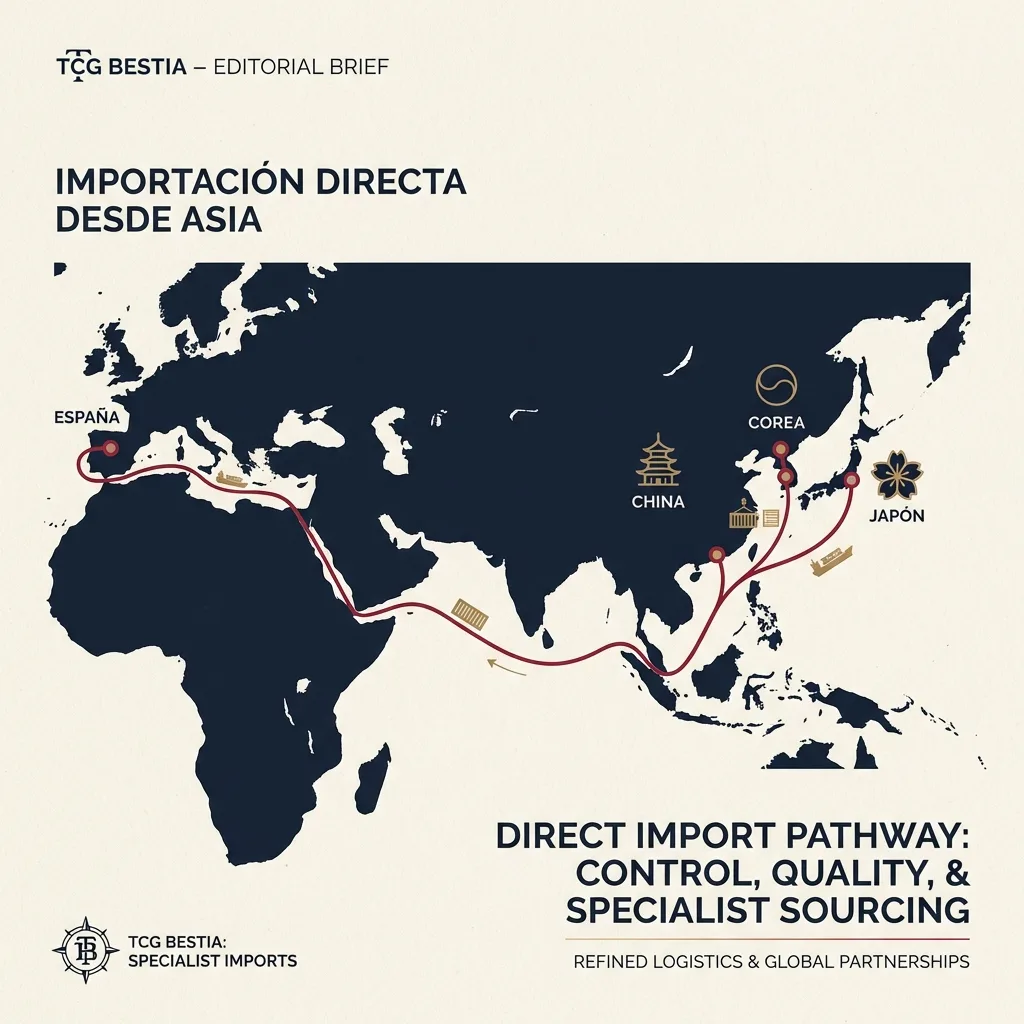
TCG Bestia is a B2B wholesale distributor importing Pokémon TCG, One Piece Card Game and Dragon Ball Fusion World directly from Japan and Korea, with stock in Europe and clients — stores, online sellers and vending operators — across the European Union. The patterns above come from real wholesale orders, not from trend reports.
Want to see what stores in your country are ordering? Request a B2B account and we will tell you what moves in your market — and what your first order should look like. You can also check current wholesale price ranges in Europe first.