If Pokémon is the engine of your card store, One Piece Card Game is the turbo. Since its launch, Bandai's TCG is a natural second line for European stores: a huge anime audience and strong collector interest. This guide covers how the wholesale side works in Europe in 2026.
Why One Piece earns its shelf space
The audience is large. One Piece is a hugely popular series, and its card game has turned that fandom into players and collectors.
Scarcity can matter. Strong sets can sell out at origin and go out of print, which can make boxes more valuable later, although this is never guaranteed.
It diversifies your revenue. A store that lives 100% from Pokémon depends on one publisher's release calendar and reprint policy. One Piece adds a second cycle of launches that can smooth your cash flow between Pokémon peaks.
Japanese vs English product
One Piece has a peculiarity that matters for your buying strategy: the Japanese market gets releases first — often months earlier — and receives exclusive sets that may never get an English print.
- Japanese product: earlier releases, exclusive sets, stronger collector demand. The natural choice if your customers include collectors and competitive players who follow the Japanese meta.
- English product: broader casual reach, easier for walk-in customers who just love the anime. Supply from official European channels is allocation-based.
The mature setup for a European store is a mixed shelf: Japanese boxes for the collectors and early adopters, English starter decks and boosters for the casual audience.
What rotates in 2026
Set-by-set demand changes fast, but the stable pattern in the market:
- Anniversary and milestone sets — anything tied to a saga anniversary tends to draw collector attention.
- Sets with fan-favourite characters as leaders (Luffy, Zoro, Shanks, Ace) — leader cards drive box demand more than raw pull rates.
- Starter decks — never glamorous, always sold. They are the entry door for new players and the cheapest way to convert an anime fan into a TCG customer.
The rule of thumb: in One Piece, a modest early order tends to be safer than a large order placed after the hype has built.
How to buy it at wholesale in Europe
The mechanics are identical to Japanese Pokémon product, and the same warnings apply:
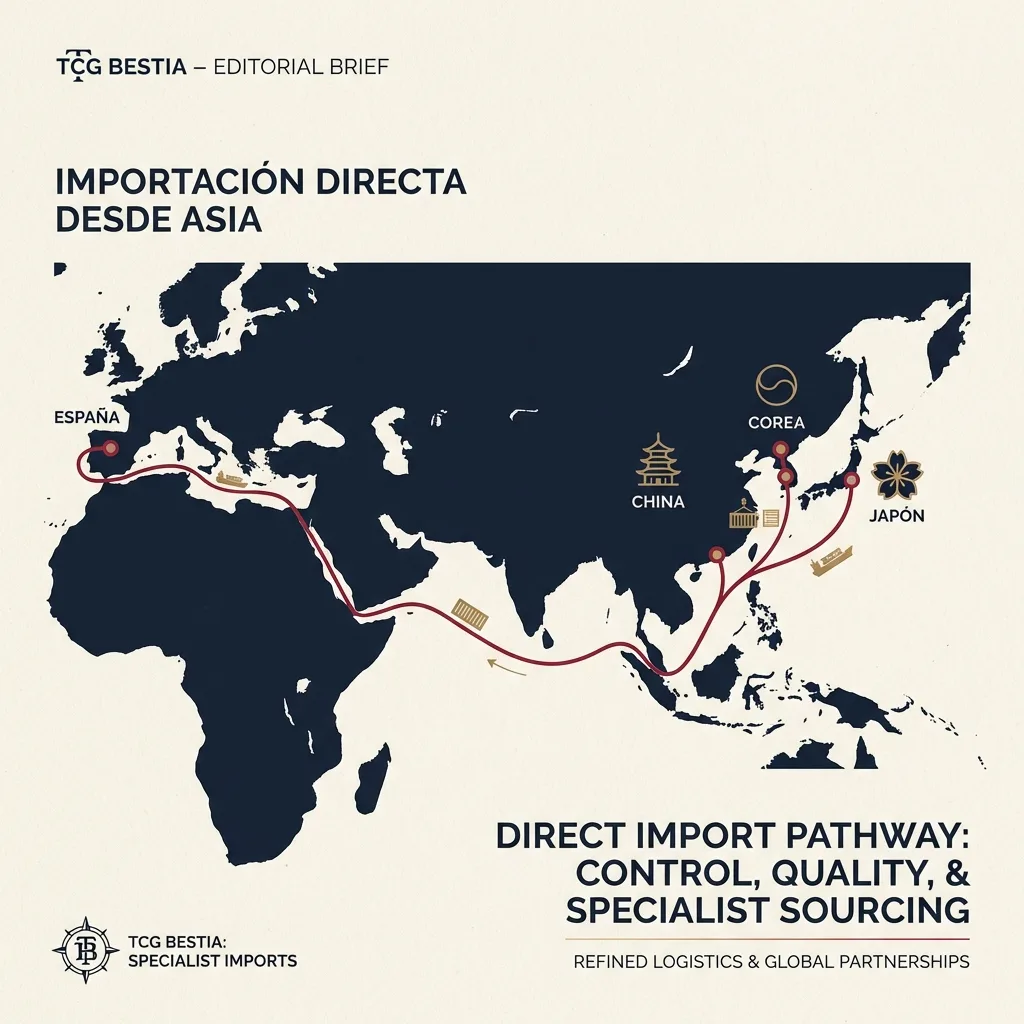
- Work with a distributor holding stock in Europe. One Piece supply chains from Japan are longer and less predictable than Pokémon's; a distributor with product already in an EU warehouse removes that gamble.
- Demand intra-community invoicing. Valid EU VAT number → invoice without VAT under the intra-community supply regime. Standard practice; anything else complicates your accounting.
- Verify authenticity. Reseals exist in One Piece too, and the higher the box price climbs, the stronger the incentive. Buy from suppliers that check batches at origin.
At TCG Bestia we distribute One Piece alongside our Pokémon lines to stores across the EU — same warehouse, same invoicing, same verification, one combined shipment.
Getting started
If One Piece is new for your store, start with one proven recent set in Japanese plus a handful of starter decks. That is a contained first test that answers the only question that matters: does your local audience bite?
Test it with a small order and read your own sales.
A recent release is OP-17 - The World's Strongest Warriors, the fourth anniversary set, bringing the Elbaf arc and the Four Emperors into the game. Full breakdown in the OP-17 wholesale guide.
Want the current One Piece wholesale list? Request a B2B account and we will send you the current catalogue and availability.