Opening a TCG store in Europe means choosing between two entry models: online-first, which starts with stock plus platform costs, or a physical store, which multiplies the risk. This TCG Bestia guide covers both models, where new stores lose money, which product mix works and how to choose a wholesale supplier.
The two viable entry models
Online-first. You start selling through a webshop and marketplaces (eBay, Cardmarket, local platforms) with no physical location. Your fixed costs stay low, which means your survival does not depend on month-one revenue. This is the model we suggest for most first-time founders.
Physical store. A shopfront gives you walk-in traffic, event revenue (tournaments, league nights) and community lock-in that online cannot replicate. But it multiplies your risk: deposit, fit-out, furniture and opening inventory. The classic path is online-first, then physical once your sales prove the local demand.
In both cases you need a registered business: it is the key that opens wholesale doors. Without it, no serious distributor can invoice you properly.
Where new stores actually lose
The failure patterns are remarkably consistent:
1. Buying retail and calling it stock. If your "wholesale" source is store discounts and marketplace deals, your economics were dead on arrival. Real wholesale means buying from a distributor with proper invoices.
2. Carrying what everyone carries. If your shelf is identical to the big-box retailer's shelf, you compete on price against someone with better buying power. The stores that thrive carry what the big boxes cannot: Japanese exclusives, Asian sets, out-of-print product.
3. Overbuying the wrong depth. A lot of one set is a bet; a few of each of several proven sets is a portfolio. Early on, breadth beats depth: you are still learning what your customers buy.
4. Ignoring accessories. Sleeves, binders and storage boxes are the quiet stabiliser of your P&L: they sell alongside every sealed purchase.
The product mix that works in 2026
- Pokémon TCG (Japanese + local language): the anchor. Japanese boxes bring collectors and social-media attention; local-language product serves families and casual players.
- One Piece Card Game: a strong second line, with an audience that only partially overlaps Pokémon's.
- Accessories: a steady complement to every sealed sale.
- Singles (optional): the line that demands the most labour. Add them once the sealed business runs itself.
The unifying principle: differentiated catalogue is your moat. Asian product is one of the most accessible ways to differentiate a European store.
Choosing your wholesale supplier
Your distributor choice quietly decides your cost structure. The checklist:
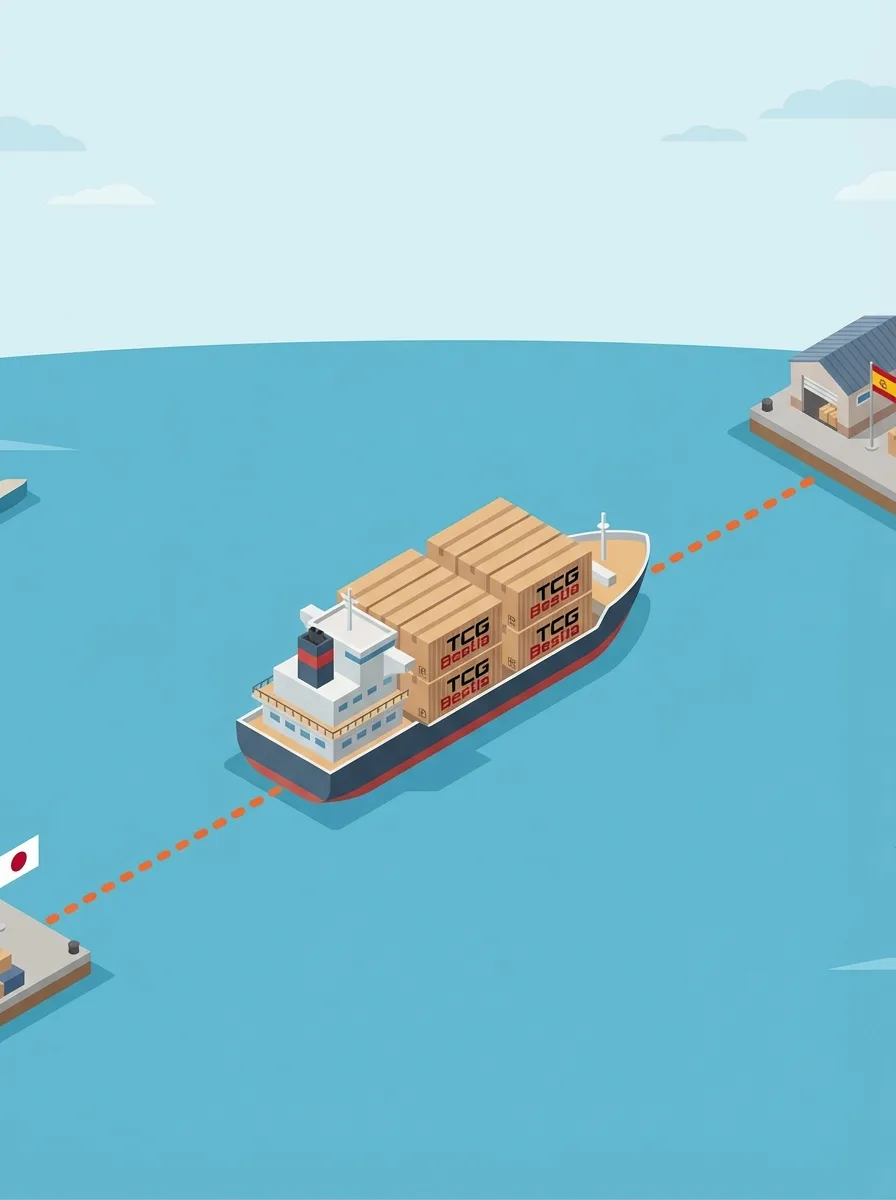
- Stock physically in Europe, so your order travels inside the EU without customs surprises on your side.
- Proper cross-border invoicing for EU businesses, handled cleanly by the supplier.
- Authenticity verification: documented anti-reseal checks at origin. One resealed box sold to a customer can end a young store's reputation.
- Clear terms: ask what the supplier requires of a new account before you commit.
- A human who answers, in a language you speak.
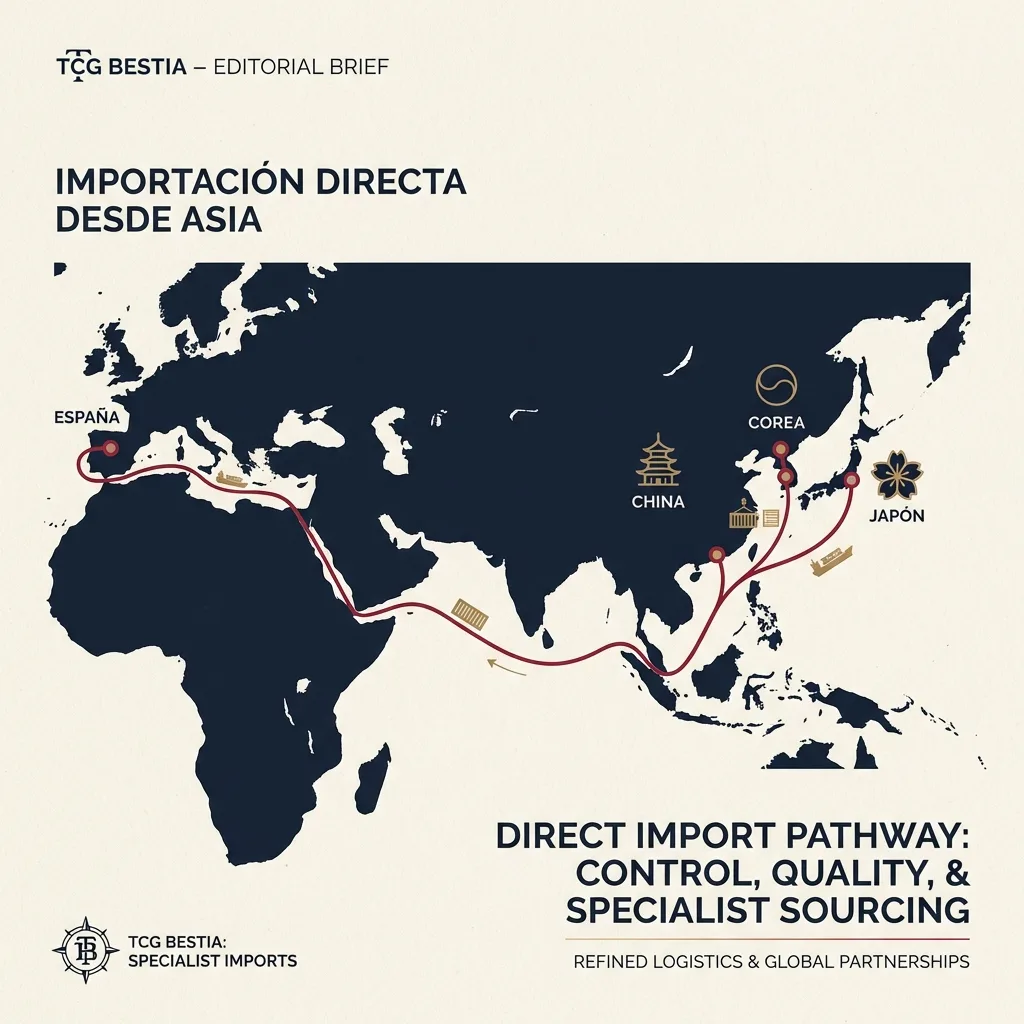
TCG Bestia imports Pokémon TCG in Japanese, Korean and Chinese, plus One Piece and Dragon Ball in Japanese, and holds stock in Europe. Customers with an approved wholesale account see the catalogue in our store.
A realistic first-year path
- First phase: online-only, tight portfolio (two Pokémon sets, one One Piece set, accessories). Learn your rotation speed.
- Second phase: reinvest into what proved itself. Start pre-ordering releases at wholesale.
- Third phase: evaluate the physical jump with real data, or double down online with a deeper catalogue and better content.
This path keeps every bet small enough to survive being wrong.
Not sure you want a full store yet? The lighter paths, marketplace selling and vending, are compared in how to become a Pokémon card reseller in Europe, and what European stores are actually buying in 2026 will help you pick your opening assortment.
Ready to see the wholesale catalogue? Request your B2B account.